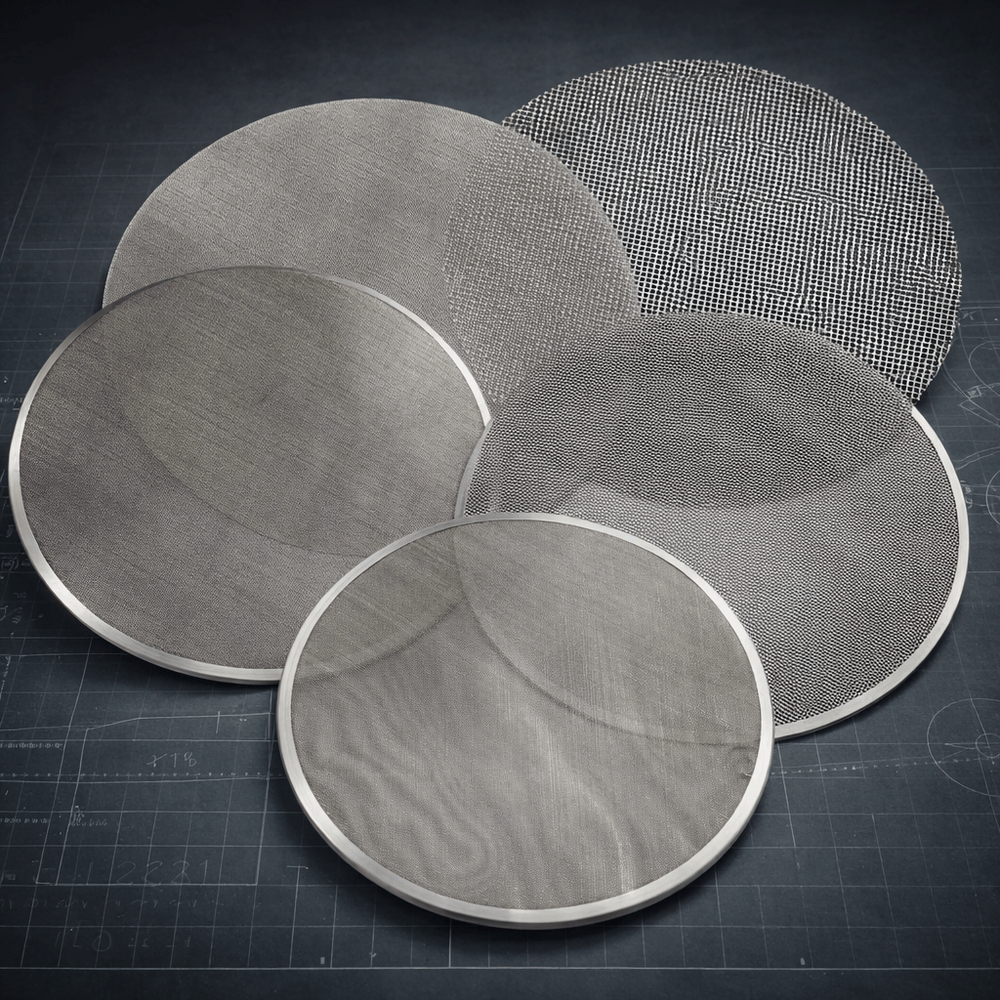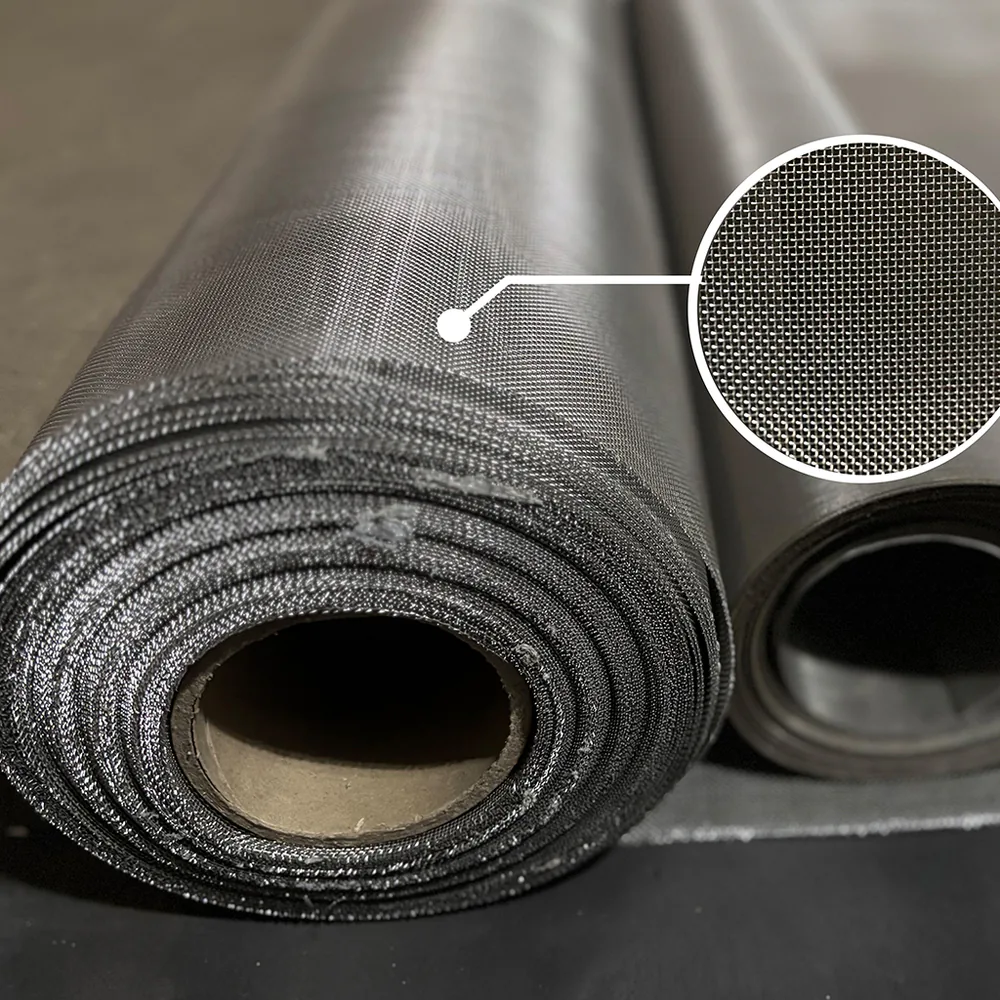
When selecting industrial wire mesh, one of the most critical structural decisions you will make is choosing between woven wire mesh and welded wire mesh. While both are manufactured from metal wires and serve screening, filtration, and barrier functions, their manufacturing processes, physical characteristics, and ideal applications are completely different.
Understanding these differences is key to selecting the right product that offers the strength, flexibility, and filtration precision required for your project. In this guide, we break down woven vs. welded wire mesh to help you choose the right one.
What is Woven Wire Mesh?
Woven wire mesh is produced on specialized weaving looms, similar to how textiles are woven. Longitudinal wires (warp wires) and transverse wires (weft or shute wires) are crossed over and under each other to create a stable, uniform pattern without any welding.
The stability of woven mesh comes from the tension and crimping of the intersecting wires. Common weave patterns include Plain Weave, Twilled Weave, and Dutch Weave, which offer different filtration capabilities and strengths.
Key Advantages of Woven Mesh:
- Ultra-Fine Openings: Woven mesh can be manufactured with extremely tiny apertures, reaching up to 500 mesh (25-micron opening size), making it the absolute standard for fine liquid and gas filtration.
- Flexibility: Because the wires are not rigidly welded together, woven mesh has a natural springiness and flexibility, allowing it to be easily formed, folded, or fabricated into extruder screen packs and circle filters.
- High Open Area: Offers excellent flow rates and minimal pressure drop in filtration systems.
What is Welded Wire Mesh?
Welded wire mesh is manufactured by laying parallel wires in a grid pattern (horizontally and vertically) and welding them together at every intersection using electric resistance welding. This creates a rigid, unyielding structure.
Key Advantages of Welded Mesh:
- Rigidity and Strength: The welded joints provide immense structural integrity. The mesh will not fray, unravel, or lose its shape even if cut into irregular pieces.
- Uniform Grid: Maintains highly consistent square openings, making it ideal for security barriers, cages, and concrete reinforcement.
- Heavy-Duty Performance: Typically manufactured from thicker wire diameters, allowing it to withstand high impact and heavy loads.
Direct Comparison: Woven vs. Welded
The Core Difference
Woven mesh is a flexible, high-precision product designed primarily for filtration, separation, and fine screening. Welded mesh is a rigid, heavy-duty product designed for structural support, security, fencing, and coarse separation.
- Filtration Precision: Woven mesh wins. Welded mesh cannot achieve the fine mesh counts (like 100 to 500 mesh) required for polymer extrusion or chemical filtration.
- Structural Integrity: Welded mesh wins. If you cut a piece of woven mesh, the edges can fray and individual wires can slide out of place. Welded mesh remains completely solid when cut.
- Cost and Weight: Welded mesh is generally heavier and more expensive per square foot for the same overall dimensions because it utilizes thicker wires, whereas woven mesh offers lightweight options with ultra-fine wires.
Conclusion: Which One Do You Need?
If your application involves liquid filtration, plastic recycling, masterbatch extrusion, fine chemical sieving, or residential insect screening, **woven stainless steel wire mesh** is the correct choice.
If you need heavy-duty industrial fencing, safety guards for machinery, concrete reinforcement, or animal cages, **welded wire mesh** is the ideal solution.
At Maruti Net Industries, we specialize in manufacturing premium woven stainless steel wire mesh rolls and custom filter screens. Contact us today to discuss your technical specifications and find the perfect fit for your operations.